Published Date
February 14, 2025
Industry
Information Technology
Research Type
Framework
Introduction- Beyond the Alarm Bell
It’s 3:00 AM. A security alert fires. Somewhere, an analyst gets the call, wakes up, and rushes to their laptop to investigate. They have to figure out what happened, how serious it is, and what to do next. In the time it takes them to get their first cup of coffee, an attacker could already be deep inside your network.
This delay is the critical window where most damage is done. But what if there were no delay? What if the investigation and response happened in the same second the threat was detected? That’s the promise of autonomous AI agents—a security force that is always on, always alert, and acts at the speed of light.
Chapter 1: Meet Your New Security Analyst
An autonomous AI agent is more than just an automation script. Think of it as a junior security analyst in digital form. It is a program built by an AI agent development company that can-
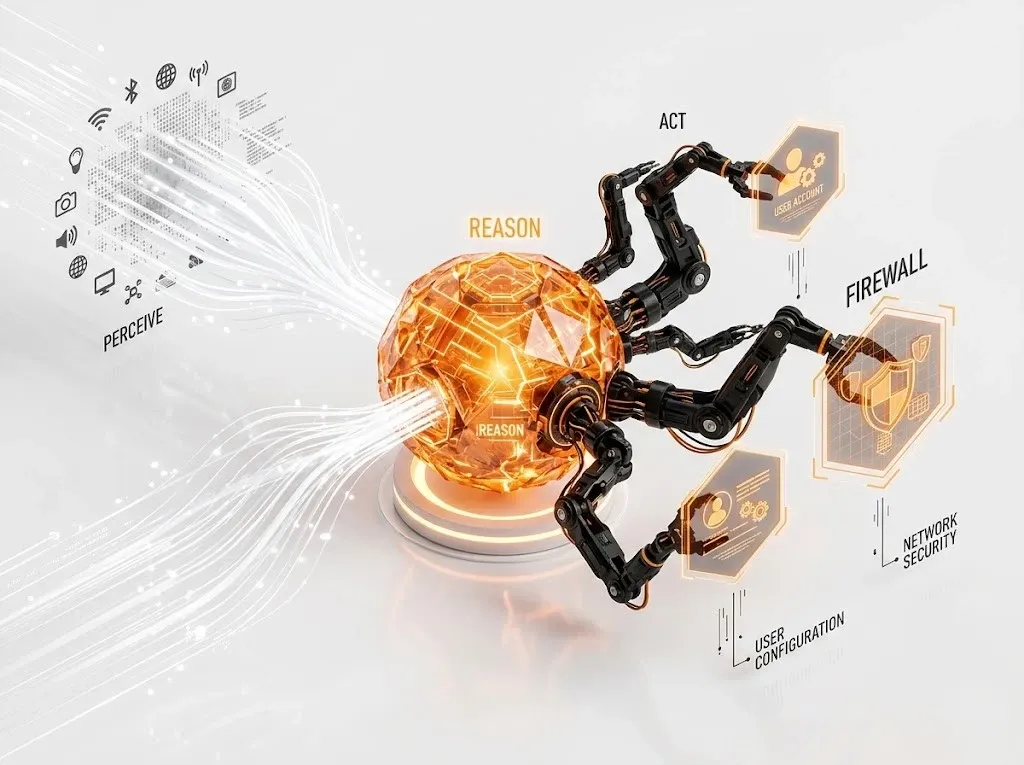
- Perceive: It plugs into your network, logs, and security feeds, constantly watching everything that happens.
- Reason: Using powerful AI models, it analyzes events to understand context. It doesn't just see a login; it sees a login from an unusual country at an odd time on a sensitive system and knows it's suspicious.
- Act: Based on its analysis, it takes action. It can quarantine a device, block an IP address, or freeze a user account to stop a threat in its tracks.
These agents are the core of modern, AI-driven threat detection.
Chapter 2: The Blueprint for Your AI Guard
Developing a security agent isn't magic; it's a structured process. Here is a simple framework.
- Phase 1 Define the Mission. You don't build one agent to do everything. You create specialists. One agent might monitor network traffic, while another, like a
voice AI for call centers, listens for fraud. You might even have an agent trained on your security policies by feeding itAI chatbot trained on PDFsof your internal documents. - Phase 2 Give it a Brain. The agent's intelligence comes from Large Language Models (LLMs). Services like
GPT-4 integration servicesorLangChain chatbot integrationgive the agent the power to understand complex situations and make decisions, not just follow simple rules. - Phase 3 Provide the Toolkit. An agent needs tools to do its job. Through APIs and
automation for IT companies(like Zapier workflows), you give the agent "hands" to interact with your security stack. It can update firewall rules, create tickets in your helpdesk, or trigger alerts in Slack. - Phase 4 Train and Spar. Before you deploy an agent, you must test it relentlessly. This is where you conduct
penetration testing servicesagainst your own AI to find its blind spots. Youhire AI automation expertteams to act as a sparring partner, ensuring your agent is robust and reliable.
Chapter 3: The Agent in Action
Let's see how this works in the real world.
- Scenario A The Ransomware Attack. The agent detects suspicious file encryption on an employee's laptop, a classic sign of ransomware. Within milliseconds, it disconnects the laptop from the network to stop the spread, archives a snapshot of the machine for analysis, and alerts the human
24/7 incident response teamwith a full report. - Scenario B The Phishing Click. An employee clicks a malicious link. The agent, monitoring outbound traffic from
endpoint protection solutions, sees the connection to a known bad domain. It immediately severs the connection and prompts the user with a warning, preventing a credential theft before it happens.
Chapter 4: The Future is Autonomous
This is just the beginning. The future of corporate security is a team of specialized AI agents working together, all visualized through a single AI dashboard development interface. This technology makes elite security accessible even for cybersecurity for startups.
By building agents with AI compliance for GDPR/HIPAA in mind—ensuring every action is logged and auditable—you can create a defense system that is not only powerful but also trustworthy. Working with the best AI + cybersecurity agency, you can build an autonomous defense force that protects your business around the clock.